
Himalayan Salt Therapy Benefits & How to Choose a Real Salt Cave
Discover the real benefits of Himalayan salt therapy, its history, and how to choose an authentic salt cave. Learn how to avoid poorly designed salt rooms.

The Truth About Himalayan Salt Therapy: What to Know Before You Step Into a “Salt Cave”
Imagine this…
You search for a salt therapy center. You’re excited. You’ve heard about the benefits, seen beautiful photos online, and you’re ready to relax and breathe in that healing salty air.
You drive there… walk inside… look around…
…and wait a second.
Where’s the salt?
No glowing walls. No salt on the floor. Just a room… maybe a few decorations… maybe even a bit dusty.
At that moment, you might be thinking: “What is this all about?”
You’re not alone.
The Real Benefits of Salt Therapy
Authentic Himalayan salt therapy, also known as halotherapy, is rooted in nature and science. When done properly, it can support:
- Respiratory health (asthma, allergies, sinus issues)
- Skin conditions (eczema, psoriasis)
- Stress reduction and deep relaxation
- Immune system support
But here’s the key: these benefits only happen when the environment is built and controlled correctly.
Salt therapy isn’t just about sitting in a room and hoping for the best. It’s about microscopic salt particles, proper air circulation, and a carefully engineered space that mimics natural salt caves found in Eastern Europe.
A Brief History You Should Know
Two decades ago, Dr. Margaret Smiechowski introduced salt therapy to the U.S. market. Her work brought the powerful healing traditions of European salt caves into modern wellness spaces.
Her early designs focused on authentic salt environments, proper airflow systems, and therapeutic-grade installations.
But about ten years later, something changed.
Some companies began trying to copy the concept… while cutting corners.
They focused on appearance or marketing buzzwords rather than the roots of salt therapy or how it actually works.
The “Missing Salt” Problem (Yes, It’s Real)
If you ever walk into a so-called salt cave and ask yourself:
That’s a red flag.
Many “salt rooms” today:
- Have little to no actual salt on the walls or floors
- Use decorative elements instead of functional design
- Skip critical systems like proper ventilation and climate control
Sitting in a dusty room is not halotherapy.
And calling it “salt therapy” doesn’t make it real.
Why Proper Design Matters
Authentic salt therapy depends on controlled conditions.
Here’s what should be happening:
- A halogenerator disperses microscopic salt particles into the air
- Climate control and ventilation regulate salt concentration
- The environment remains clean, dry, and balanced
If this is done correctly, you should leave the session with:
- A slight taste of salt on your lips
- A feeling of clarity in your breathing
- No visible residue covering your body
If you walk out covered in salt dust? That’s not therapy, that’s poor design.
Large salt particles are too heavy to reach deep into the respiratory system. They’re ineffective for treatment and can even be uncomfortable.
How to Choose the Right Salt Cave
Before visiting any salt therapy center, do a little homework. It makes all the difference.
Here’s what to look for:
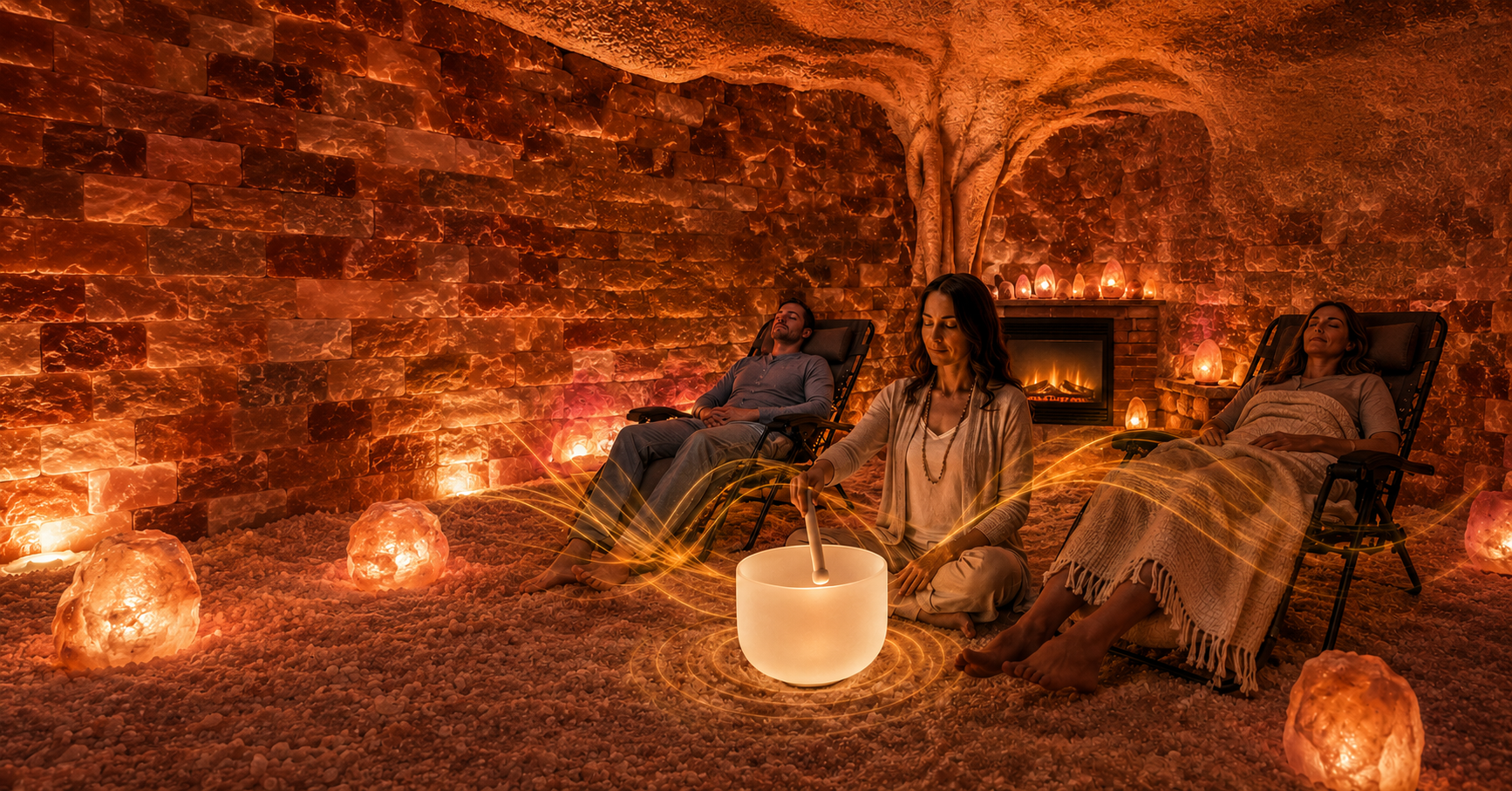
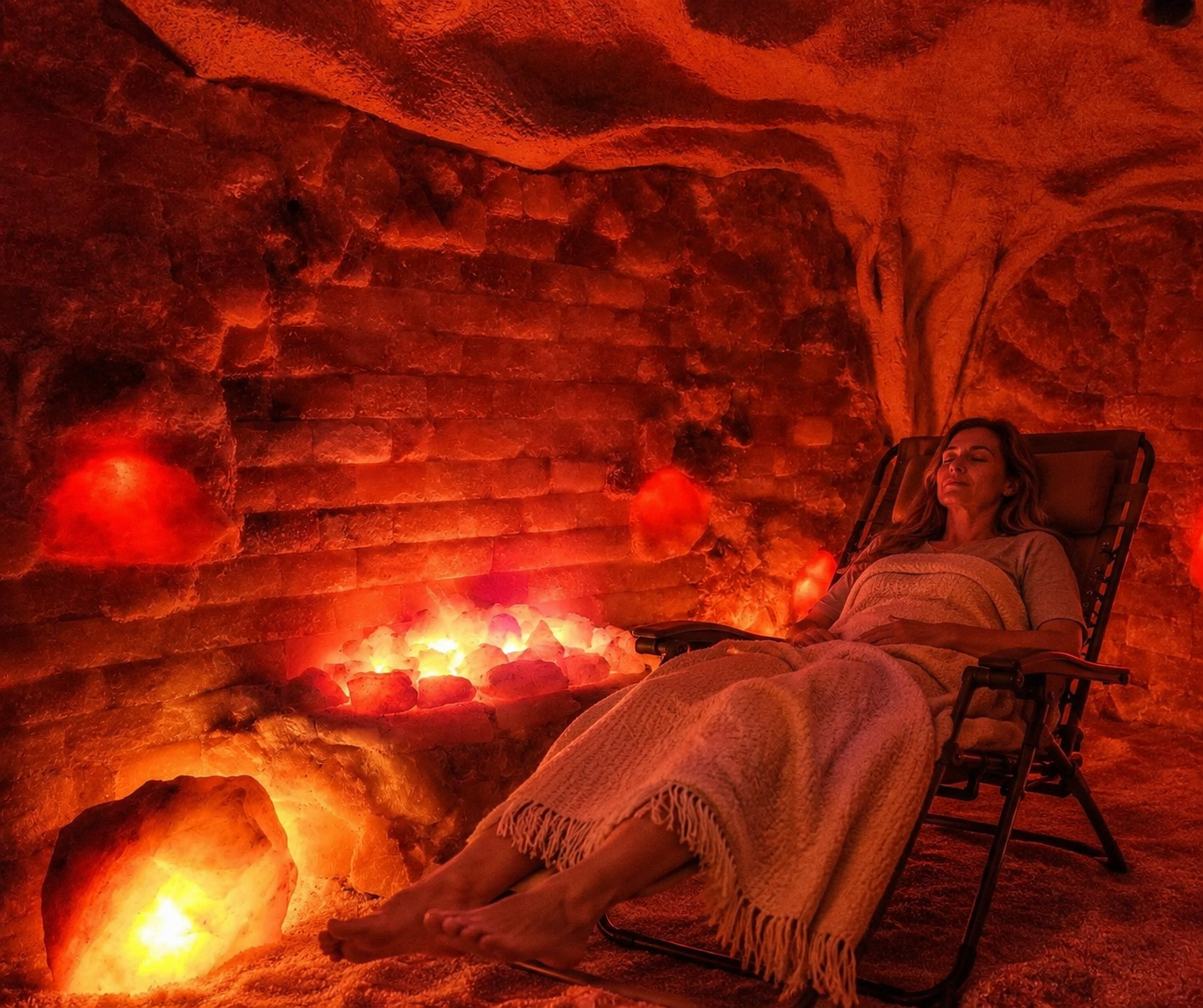
- Salt should be on all four walls and often the floor
- It should look intentional, clean, and professionally installed
2. No Fabric or Dust-Trapping Materials
- Avoid spaces with fabric furniture or décor that collects particles
3. Proper Construction
- No exposed HVAC grills in the ceiling
- No drop ceilings, windows, or unfinished surfaces
- No random sticks, branches, or decorative fillers pretending to be “natural.”
4. Clean, Engineered Environment
- The room should feel controlled—not humid, not dusty
- Airflow should be subtle but consistent
The Bottom Line
Salt therapy is powerful, but only when it’s done right.
If something feels off… it probably is.
A true Himalayan salt cave isn’t just a room; it’s a carefully designed therapeutic environment rooted in decades of knowledge and tradition.
So next time you walk into a “salt cave,” take a moment to look around.
If you’re wondering where the salt went… now you know.
If you’re curious about what a properly built salt cave should look and feel like, or you’re considering adding one to your space, it’s worth having a real conversation with experts who understand both the science and the history behind it.
www.oceanairhimalayansaltcave.com 774-801-770-3138, www.saltcavebuilder.com 802-770-3138