
Sound Therapy, Vibration and the Future of Wellness
Explore how sound therapy fits into vibration therapy, what Einstein’s science really suggests, and what research says about stress, relaxation and wellness.
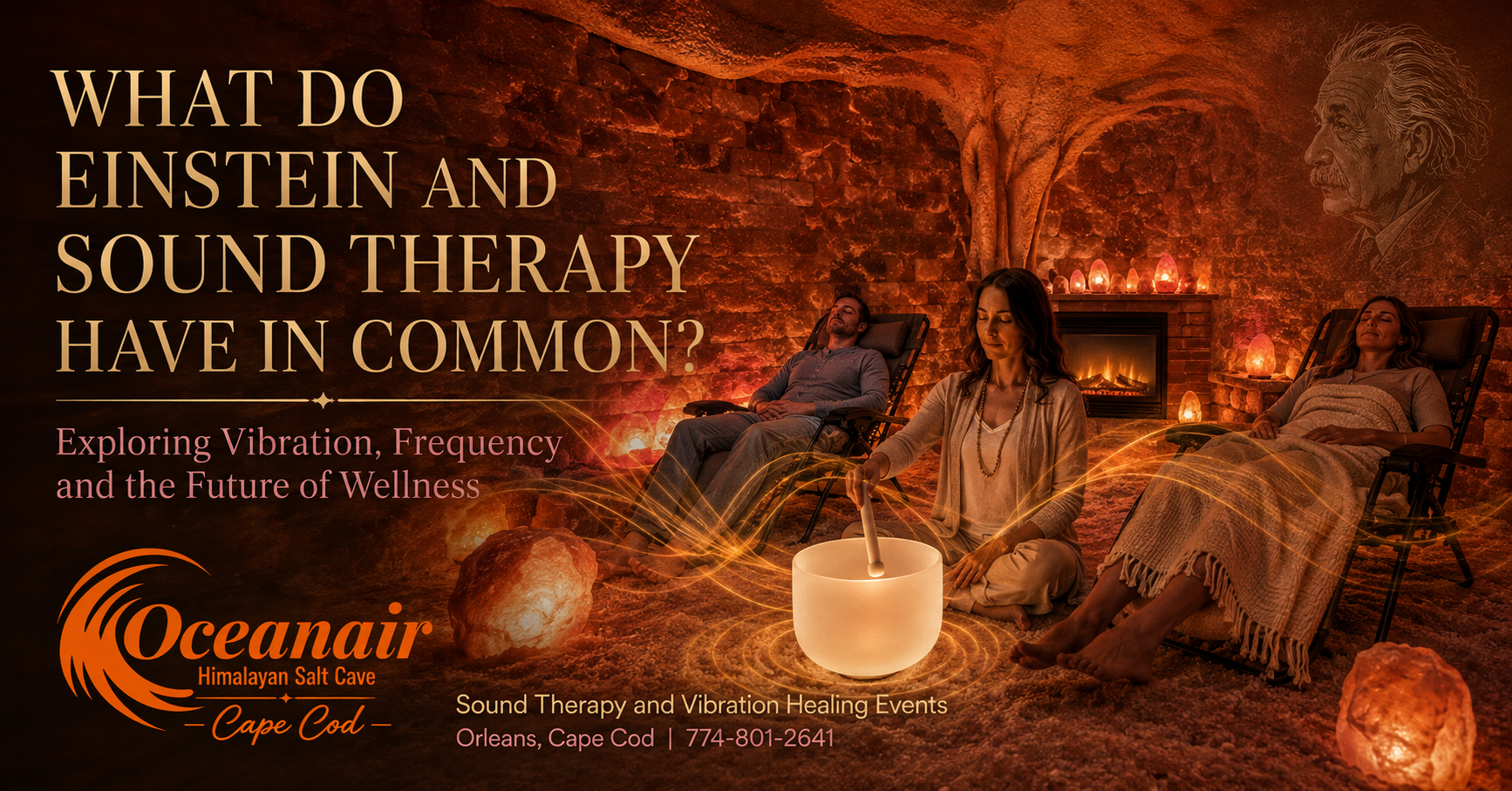
What do Albert Einstein’s research and a modern sound therapy session have in common?
At first, the connection may seem surprising. Einstein studied matter, energy, light, space, and time.
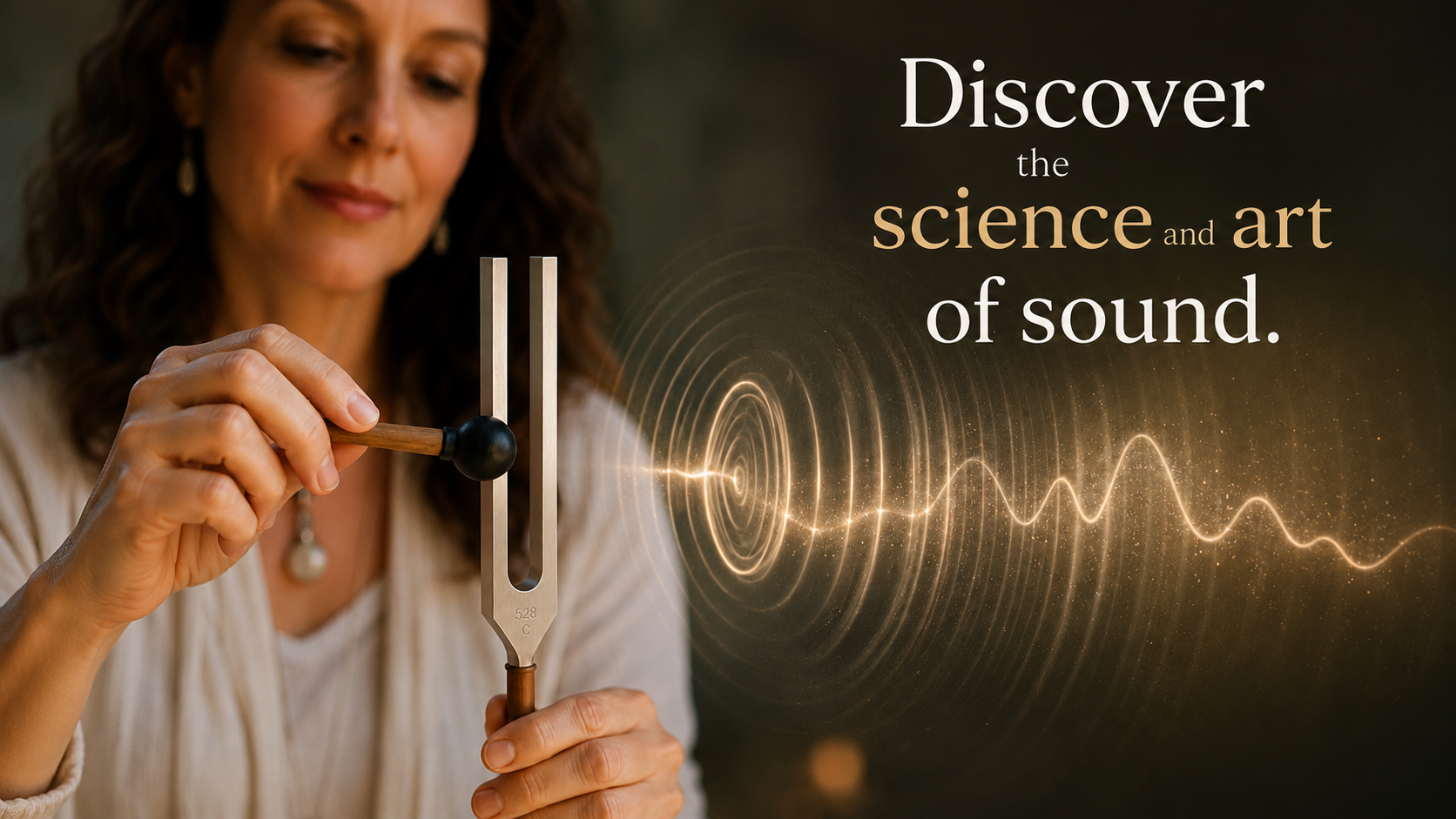
A sound therapy practitioner works with singing bowls, gongs, chimes, tuning forks, rhythm and silence. Yet both invite us to look beyond what appears solid and still, and to consider a world shaped by movement, energy, waves and frequency.
That does not mean Einstein invented sound therapy or proved that a singing bowl can treat disease.
He did neither. His work helped change the way we think about the physical universe. It showed that reality is far more dynamic than it appears. Modern sound therapy begins with a simpler, measurable fact: sound itself is vibration.
When a singing bowl is played, it does not merely create a pleasant tone. The instrument vibrates, the surrounding air moves, the eardrum responds, fluid moves inside the cochlea, and the auditory system converts that physical movement into electrical signals the brain can interpret.
The National Institute on Deafness and Other Communication Disorders provides a clear, step-by-step explanation of how sound waves are converted into signals in the brain.
Sound is therefore something we hear, but vibration can also be felt. This is where sound therapy becomes part of the larger conversation about vibration therapy.
The Famous Einstein Quote, and an Important Correction
A statement frequently attributed to Einstein says, “The future of medicine will be the medicine of frequencies.” It is a powerful sentence, and it has been repeated throughout the wellness and frequency-therapy world.
However, no authenticated speech, letter, or publication by Einstein has been identified as its original source. It is safest to describe it as a quote attributed to Einstein rather than a verified statement from him. That distinction matters. Good wellness education should be inspiring and accurate.
The idea behind the quotation remains worth exploring. Medicine already uses precisely controlled waves and frequencies in technologies such as diagnostic ultrasound, certain forms of focused ultrasound, and shock-wave procedures.
These are carefully calibrated medical applications, not proof that every frequency-based wellness claim is valid.
They do, however, show that mechanical energy and vibration can interact with the body in meaningful ways when the method, dose and purpose are clearly defined.
Einstein’s physics gives us a compelling intellectual doorway. Modern research must still tell us which sound and vibration practices are helpful, for whom, under what conditions and with what limitations.
Sound Therapy Is Larger Than Music Alone
People often use the terms sound healing, sound therapy, music therapy and vibration therapy as if they mean the same thing. They overlap, but they are not identical.
A sound bath or sound meditation is generally a guided wellness experience. Participants listen to tones produced by instruments such as crystal bowls, metal singing bowls, gongs, drums, chimes or tuning forks.
The purpose is often to encourage stillness, focused attention, meditation and deep relaxation.
Music-based interventions form a much larger category. They may include listening to recorded music, singing, rhythmic movement, improvisation or music-assisted relaxation.
Research in this area is broader than the research on sound baths alone.
Clinical music therapy has a specific professional meaning. The American Music Therapy Association defines it as the evidence-based use of music interventions to achieve individualized goals within a therapeutic relationship led by a credentialed professional. In other words, relaxing music can be beneficial, but not every experience involving music should be called clinical music therapy. You can read the American Music Therapy Association’s definition for the important distinction.
Vibroacoustic therapy adds another dimension. It uses low-frequency sound delivered through a chair, table, bed, mat or other surface so that vibration can be felt in the body as well as heard. This is the point at which sound becomes a more explicitly tactile experience.
Seen together, these practices form a continuum: sound can be heard, emotionally experienced, used to guide movement and, at lower frequencies or through specialized equipment, physically felt.
What Happens During a Sound-Based Experience?
The best explanation is not that one “magic frequency” cures everything. Human responses to sound are far more complex and individual.
Sound can direct attention away from constant mental activity and toward a present sensory experience. Rhythm may influence the pace of breathing or provide an external cue for movement. Music can activate emotion, memory, and expectation.
A quiet, intentional setting can reduce competing stimulation and make it easier to rest. Low-frequency vibration adds tactile input, which researchers are studying for possible effects on relaxation, pain perception and autonomic activity.
These pathways can operate together. The participant is not merely hearing an instrument. The person is receiving an organized sensory experience through hearing, attention, emotion, memory and sometimes touch.
This is why the environment matters so much. A sound session delivered in a harsh, noisy, or visually distracting room is not the same experience as one conducted in a thoughtfully designed restorative space.
What Does Modern Research Say?
The strongest research base is for music-based interventions rather than for broad claims about “healing frequencies.”
A major systematic review and meta-analysis examined 104 randomized controlled trials with 9,617 participants. It found significant beneficial effects on both physiological and psychological measures associated with stress, with the psychological effects larger overall. Read the review of music interventions and stress-related outcomes.
The National Center for Complementary and Integrative Health reports that music-based interventions may help with stress and may also be useful for anxiety and pain in some populations.
At the same time, it emphasizes that study quality varies and that many conclusions remain preliminary. Its overview, Music and Health: What the Science Says, provides a balanced summary of the evidence.
Research focused specifically on singing bowls is promising but less developed. A 2025 systematic review identified 19 clinical studies, including nine randomized controlled trials. The authors reported potential benefits for anxiety, depression, sleep and some cognitive or physiological measures, but also concluded that the evidence needs to be strengthened through larger, higher-quality studies and more standardized methods. The systematic review of clinical studies on singing bowls is encouraging, but it does not justify claims of a cure.
Vibroacoustic therapy is also an emerging area. A scoping review of its use in adults experiencing pain found that many studies reported positive outcomes, but the studies were small and highly varied. The reviewers concluded that effectiveness still needs to be established through stronger controlled research. That review of vibroacoustic therapy and pain captures the field accurately: interesting potential, meaningful experiences and important questions still unanswered.
A 2024 study of vibroacoustic sound massage measured electrocardiogram and electroencephalogram signals. The researchers reported increased parasympathetic activity and patterns consistent with reduced arousal and greater relaxation, while clearly stating that further research is needed. See the study of vibroacoustic stimulation and stress.
The responsible conclusion is neither “sound does nothing” nor “sound heals everything.” The evidence supports the use of sound and music as meaningful tools for relaxation and stress management, with potential complementary benefits in selected settings. More specific therapeutic claims require more specific evidence.
Why Sound Therapy and a Salt Cave Belong Together
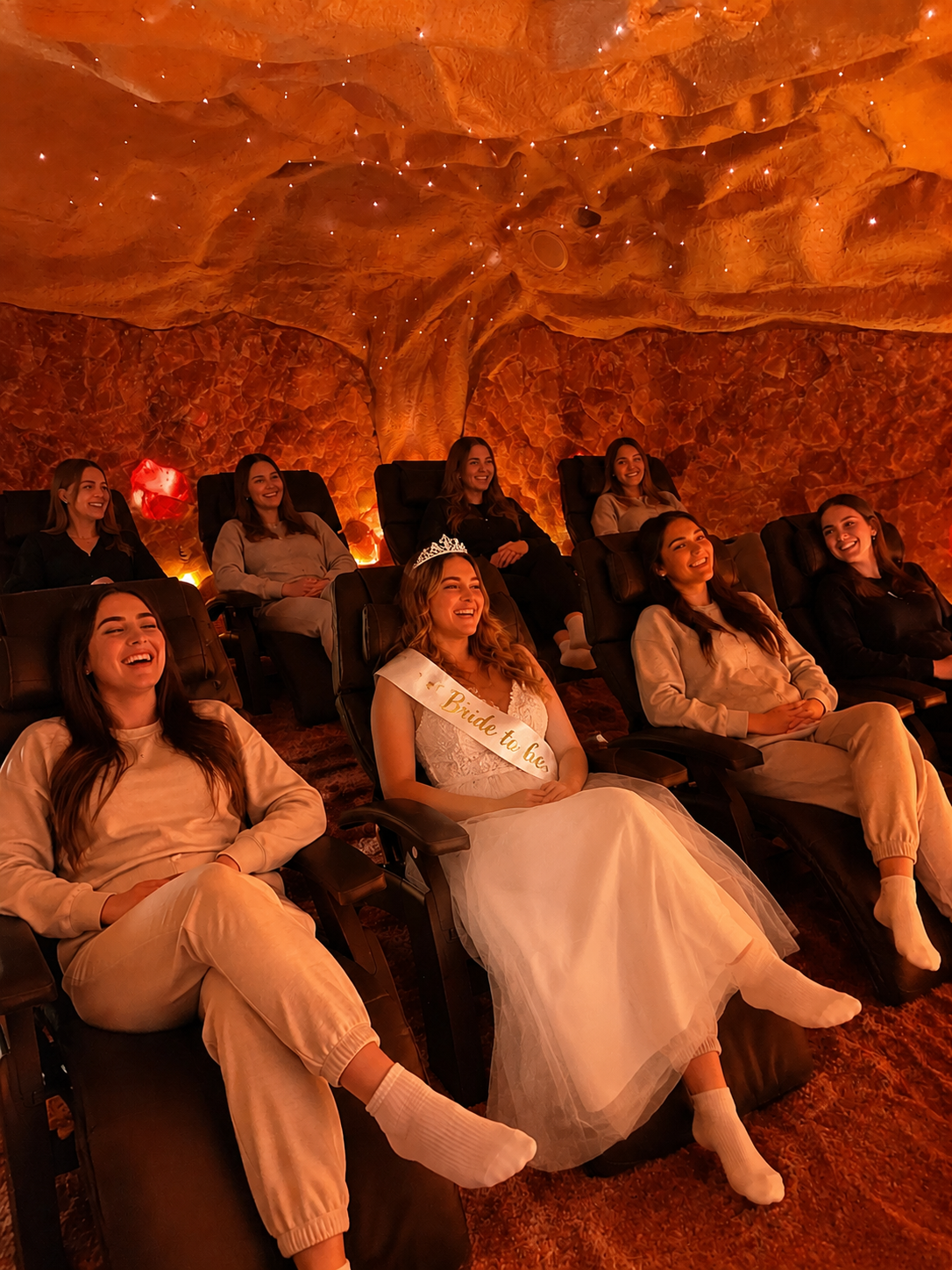
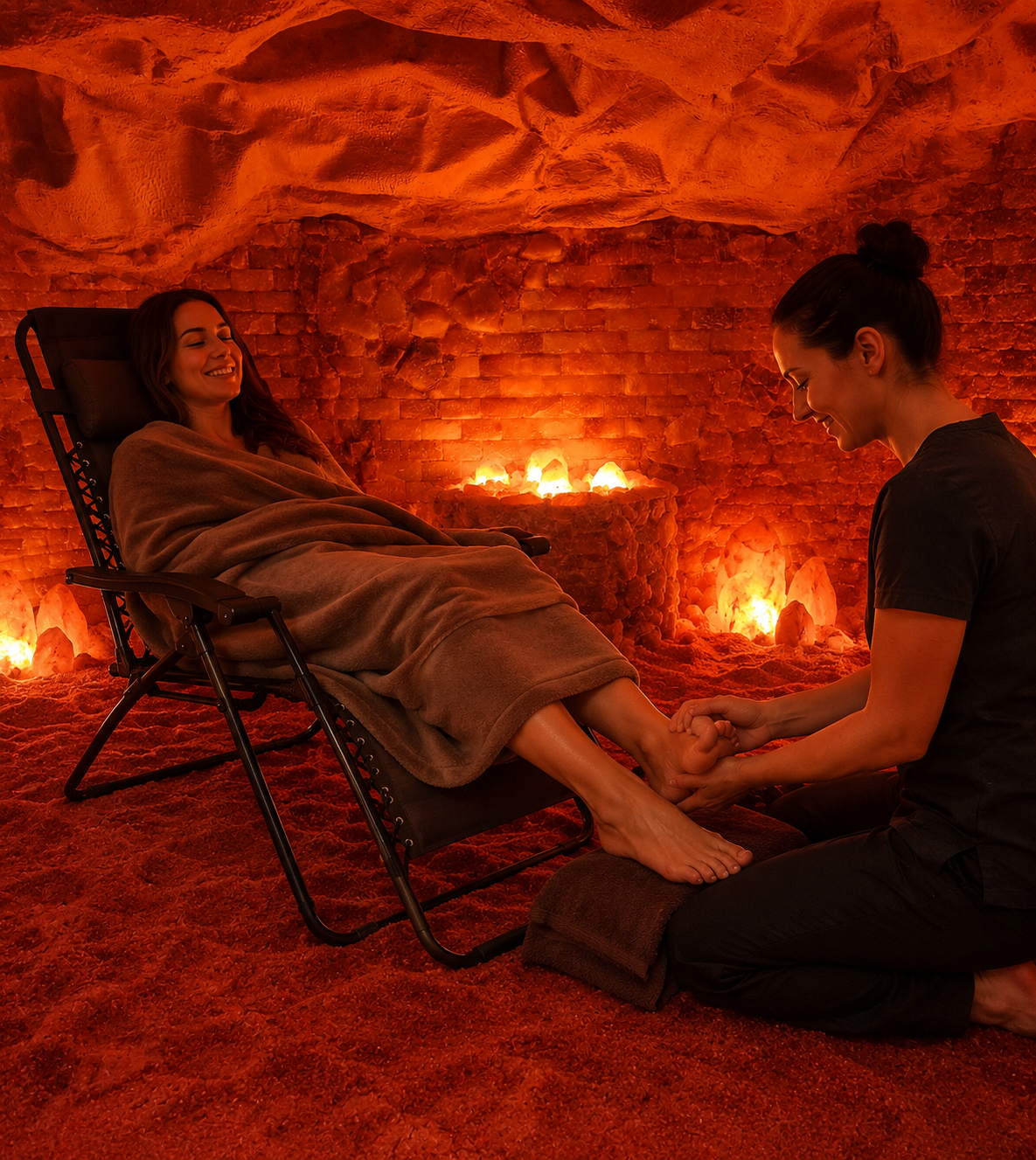
A professionally designed salt cave is already a complete sensory environment. Warm light softens the visual field. The textured salt walls separate the guest from the appearance of an ordinary treatment room. A comfortable reclining chair supports physical stillness. The quiet atmosphere creates space between one thought and the next.
Sound can become the thread that brings those elements together.
In a salt cave, a singing bowl does more than fill silence. Its tone travels through a room intentionally created for rest. A gong can build gradually and then disappear into stillness. Chimes can shift attention without demanding effort. Guided breathing, meditation or gentle music may help guests settle into the session instead of spending the first twenty minutes mentally replaying the day.
The salt cave does not automatically multiply the clinical effect of another modality, and sound therapy should not be presented as a substitute for medical or mental health care. The value of the combination is experiential: it brings environment, sound, comfort and focused rest into one carefully designed session.
That is the bigger picture of vibration therapy. It is not only the instrument. It is the relationship among frequency, space, the nervous system, personal perception, and the practitioner's skill.
Sound Should Be Designed, Not Added as an Afterthought
In a wellness space, sound quality matters. So do volume, pacing, acoustics, speaker placement and silence. More sound is not necessarily better.
Louder is certainly not better; excessive volume can damage hearing. Some sounds may also bring up difficult memories or emotional reactions, which is why participant comfort and practitioner awareness are important.
A well-designed sound experience should have a clear purpose. Is the goal quiet meditation, guided breathwork, immersive live instruments, or low-frequency vibroacoustic stimulation? Will the session be delivered by a sound practitioner, a board-certified music therapist, or another qualified professional? Does the room support clear, balanced sound without harsh echoes? Can guests communicate discomfort and step out if needed?
These questions turn sound from a decorative extra into an intentional wellness modality.
Is Vibration Part of the Future of Wellness?
Very likely, but its future should be built on curiosity and evidence, not exaggerated promises.
Einstein’s genuine legacy was not a sound-healing formula. It was a willingness to question familiar assumptions and examine reality more deeply.
Sound and vibration research asks us to do something similar: to study how physical waves become sensation, how sensation influences attention and emotion, and how carefully designed experiences may support human well-being.
Perhaps the most useful question is not, “Did Einstein predict sound therapy?”
It is this: What can we learn when physics, neuroscience, music, touch, and restorative design are allowed to inform one another?
Sound therapy offers an opportunity to explore that question—not as magic or a replacement for medicine, but as a powerful sensory practice supported by a growing body of research.
To experience sound in a setting designed for deep rest, contact Oceanair Himalayan Salt Cave in Orleans, Massachusetts, at 774-801-2641. If you are creating a spa, wellness center, or salt cave and want sound and sensory design considered from the beginning, contact Oceanair Himalayan Salt Cave
This article is for educational purposes only. Sound-based wellness experiences are complementary practices and are not substitutes for diagnosis or treatment by a qualified healthcare professional.