
Salt Therapy Rooms: Why Professional Design Matters
A salt wall is only the beginning. Learn what to ask about a salt therapy room’s builder, ventilation, climate control, and design.

What Makes a Salt Therapy Room? Look Beyond the Walls
As salt therapy grows in popularity, salt rooms and salt caves are appearing in more wellness centers. Some are thoughtfully designed. Others start with a few salt bricks and a familiar room, then borrow the name “salt therapy.” From a visitor’s chair, the difference can be hard to see. The walls catch your eye. The decisions that shape the air, the comfort of the space, and its day-to-day operation are mostly hidden. So, before you book a session or invest in building a room, ask what is happening beyond the salt walls.
A Salt Wall Alone Does Not Make a Salt Therapy Room
One illuminated salt wall can look beautiful in a lobby. It does not, on its own, tell you how a salt therapy room was designed or how it operates. Even a room with salt on every surface raises questions: Is there a halogenerator? How is it operated?
Those details require planning across the entire room and the surrounding building.
Professional Salt Cave Design Includes Air, Climate, and Materials
A professionally planned salt cave begins with the intended use of the space.
The builder must consider the room’s surfaces, equipment, airflow, temperature, humidity, lighting, cleaning, and access for guests. The halogenerator, if used, should be selected and operated as part of that overall design. Adding more salt is not a substitute for planning.
Air movement deserves particular attention.
Fine airborne particles can travel beyond the room if the surrounding building systems are not considered. Ventilation and humidity management also affect comfort and the upkeep of materials and equipment.
Salt exposure can be hard on unsuitable components, especially where moisture is present. The aim is a room designed to operate consistently while limiting unwanted salt buildup elsewhere in the facility. The U.S. Environmental Protection Agency explains how ventilation affects indoor airborne particles; the requirements for a particular commercial space depend on its approved plans and local code.
Imported equipment does not settle those questions for a U.S. business. An experienced builder needs to coordinate with qualified local professionals on ventilation, electrical work, accessibility, and the applicable building requirements. Turning off ventilation during occupied sessions, for example, should never be assumed to be acceptable without that review.
Who Designed the Salt Cave at Oceanair?
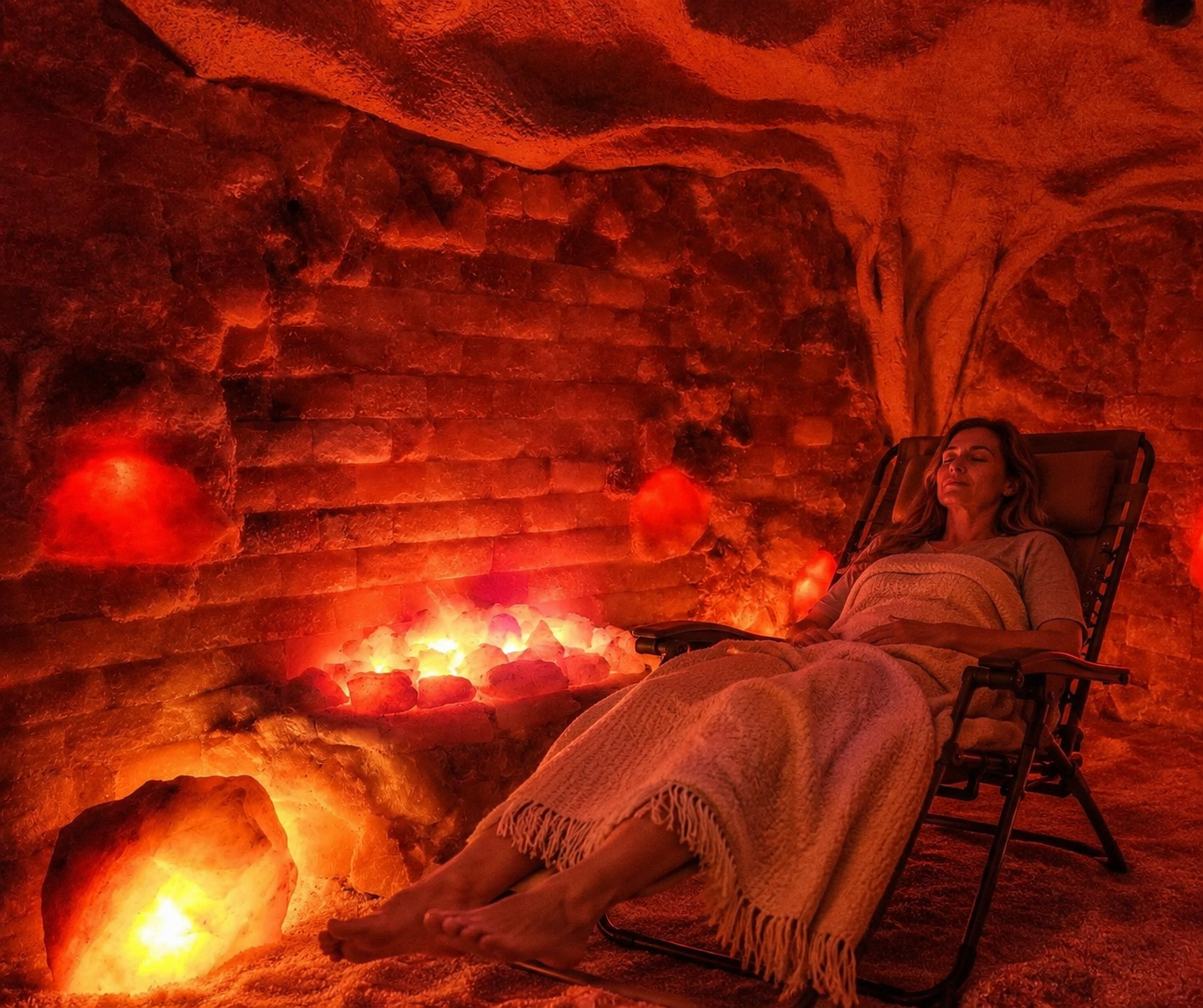
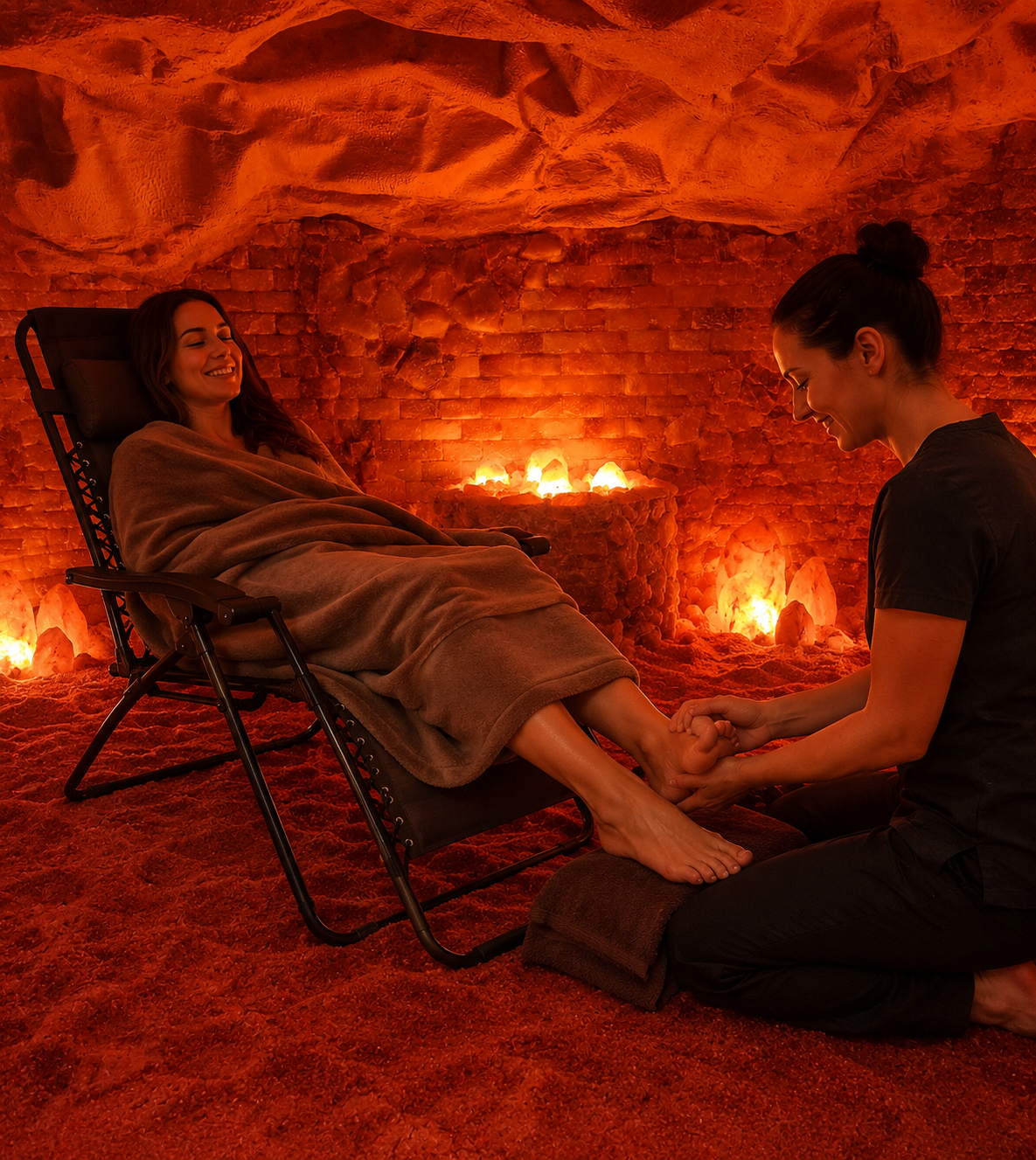
Oceanair Himalayan Salt Cave in Orleans, Massachusetts, was created by Dr. Margaret Smiechowski. Dr. Margaret brought her experience as an early pioneer of salt cave development in the United States to the space. For us, that means the cave is more than a striking backdrop: its design reflects years spent considering how a salt room feels, functions, and is maintained.
How to Evaluate a Salt Therapy Center Before You Visit
Start with one direct question: Who personally designed and built this salt room? Ask for the person’s name and relevant experience. Then ask how the room manages air, temperature, and humidity, and whether a halogenerator is used. A knowledgeable operator should be able to explain the room’s basic design and maintenance in plain language, even if some construction details are proprietary.
Look closely at the setting, too. A single salt wall, an office-style drop ceiling, wallpaper, exposed rope lighting, or household fixtures may prompt useful questions about the materials selected.
Ask how guests with mobility needs can access the space. None of these observations alone proves that a room is unsafe or ineffective.
Accessibility and ventilation obligations depend on the site and the applicable requirements, but both deserve clear answers from the operator.
Finally, visible salt dust on your clothes after a session is a reason to ask how the room is operated and maintained. More visible salt does not automatically mean a better session. The salt room could have unhealthy levels of salt in the air.
Experience the Difference at Oceanair Himalayan Salt Cave
Salt rooms are opening everywhere.
Before choosing one, find out who stands behind the room, what experience they bring, and how they run the space. Before building one, bring the right design and engineering expertise into the project from the start.
At Oceanair, you can experience a salt cave created by Dr. Margaret Smiechowski in Orleans, MA. Call Oceanair Himalayan Salt Cave at 774-801-2641 to schedule your visit and learn more about the space Dr. Margaret built.