
Tuning Fork Healing and Pain Relief in a Salt Cave
Discover tuning fork healing, its 1950s hospital history, and modern use for relaxation and pain support at our Cape Cod salt cave workshop.
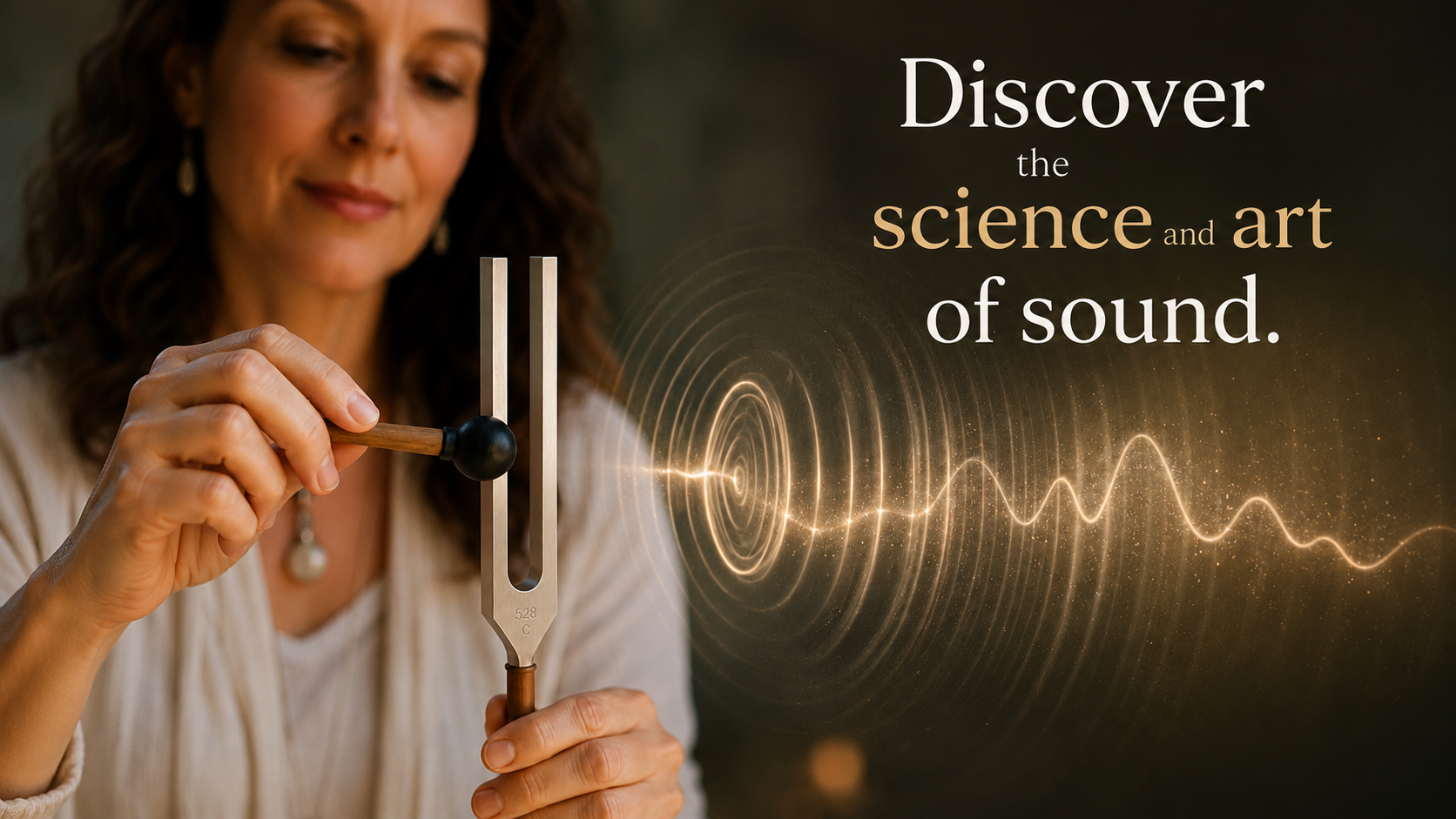
Tuning Fork Healing and Pain Relief: An Ancient Wellness Tool Is Making a Comeback
Tuning forks are gaining renewed attention as gentle tools used in sound healing, relaxation, meditation, and complementary pain-management practices.
Their precise frequencies create sound and vibration that can be experienced around the body or, with certain weighted tuning forks, applied to specific areas by a trained practitioner.
Although many people are only now discovering tuning fork healing, these instruments have a long history in healthcare.
By the 1950s, tuning forks were commonly found in hospitals, medical offices, and nursing programs.
They were primarily used to evaluate hearing, nerve sensation, and the body’s ability to perceive vibration.
Today, tuning forks are returning in a different way.
Wellness practitioners are exploring how sound and vibration may support relaxation, help release tension, and provide comfort for people experiencing stress or physical discomfort.
At Oceanair Himalayan Salt Cave in Orleans, Massachusetts, guests can discover this fascinating practice during a hands-on tuning forks workshop inside the calming environment of an authentic Himalayan salt cave.
What Is Tuning Fork Healing?
Tuning fork healing is a complementary wellness practice that uses calibrated metal forks to create specific sound frequencies and physical vibrations. When activated, each fork produces a steady tone and a vibration that gradually fades.
During a session, an unweighted tuning fork may be held near the body to create a focused sound experience.
A weighted tuning fork produces a stronger physical vibration and may be placed gently on selected areas of the body by a properly trained practitioner.
The experience is designed to encourage relaxation and body awareness.
Some people describe it as calming, grounding, or helpful for releasing feelings of tension.
Tuning fork practices should complement, not replace, professional medical care. Anyone experiencing persistent or severe pain should always consult a qualified healthcare provider.
The Healing History of Tuning Forks
The tuning fork was invented in 1711 by John Shore. Although it was originally created to produce a reliable frequency, physicians and researchers soon became interested in how its sound and vibration interacted with the human body.
During the 1800s, tuning forks entered medical practice. Doctors began using them to study hearing through air and bone conduction. They were eventually incorporated into neurological examinations because the vibration could help practitioners assess nerve sensation.
A vibrating fork could be placed on a joint or bony area while the patient reported when the vibration began and ended. This provided useful information about how well the person could detect physical sensation.
Over time, tuning forks became closely associated with healthcare, particularly hearing examinations and neurological assessments. Their ability to produce consistent vibration made them a simple but valuable medical tool.
Tuning Forks in Hospitals During the 1950s
By the 1950s, tuning forks were familiar instruments in hospitals, nursing schools, and doctors’ offices. Medical professionals used them to evaluate hearing and test vibration sensation in the hands, feet, and other areas of the body.
Historical records support their mid-century use primarily as diagnostic and assessment tools. Claims that hospitals routinely used tuning forks as a direct treatment for pain during the 1950s are harder to document.
However, their use helped healthcare professionals understand the relationship between vibration, nerves, sensation, and painful areas of the body.
For example, a tuning fork could be used during an examination to determine whether a patient could feel vibration normally. It might also help identify an area where vibration caused unusual discomfort. These observations could provide clues about nerve function, injury, or the need for further testing.
According to the University of Virginia School of Nursing, nurses have used tuning forks for generations to evaluate hearing and neurological sensation. They continue to be used in selected clinical examinations today.
As electronic diagnostic equipment became more common, traditional tuning-fork examinations became less visible. Nevertheless, the tuning fork never completely disappeared from healthcare.
Why Are Tuning Forks Coming Back?
Modern life keeps many people in a constant state of physical and emotional stress. Long hours at a computer, poor sleep, repetitive movement, and everyday pressure can all contribute to muscle tension and discomfort.
As people search for gentle, noninvasive ways to relax, tuning fork healing is receiving renewed interest. Sound therapists, massage therapists, energy practitioners, meditation teachers, and holistic wellness professionals are incorporating tuning forks into their services.
Several qualities are contributing to their return:
- Tuning forks are noninvasive.
- Their tones can encourage focused attention.
- Weighted forks create a vibration that can be physically felt.
- They can be incorporated into meditation and relaxation practices.
- They are portable and relatively easy to learn.
- They provide a hands-on introduction to sound and vibration.
The goal of a wellness tuning-fork experience is not to diagnose or cure a medical condition. It is to create a calming sensory experience that may help the participant relax, become more aware of the body, and temporarily feel less overwhelmed by tension or discomfort.
How May Tuning Forks Support Pain Relief?
Pain is complex. It can be influenced by injury, inflammation, nerve sensitivity, muscle tension, stress, sleep, emotions, and many other factors. No single wellness technique can address every cause of pain.
Tuning forks may be helpful as a complementary relaxation practice, particularly when discomfort is accompanied by tension and stress. Their sound gives the mind a single point of focus, while the vibration of a weighted fork creates a physical sensation that may redirect attention away from discomfort.
People interested in tuning fork healing often explore it for:
- Muscle tension
- General stiffness
- Stress-related discomfort
- Feelings of physical fatigue
- Difficulty relaxing
- Mind-body awareness
- Support during meditation
- Complementary wellness routines
Some practitioners place weighted tuning forks near tight muscles, joints, acupressure points, or other appropriate areas. The vibration may feel like a gentle internal massage. Individual experiences vary, and research into tuning-fork-based pain relief remains limited.
A tuning fork should never be used over an acute injury, suspected fracture, open wound, recent surgical site, or other sensitive area without guidance from an appropriate healthcare professional.
Sound, Vibration and the Nervous System
When people are stressed, the body may remain tense even after the stressful situation has ended. Breathing can become shallow, muscles may tighten, and the mind may have difficulty slowing down.
A tuning fork produces a clear tone that gradually becomes quieter. Listening closely to that tone can function as a simple mindfulness exercise. The participant naturally focuses on the sound, follows it as it fades, and becomes more aware of the present moment.
The vibration can also create a strong sensory point of focus. This combination of sound, attention, and physical sensation may help some participants settle into a more relaxed state.
Relaxation does not necessarily remove the cause of pain, but it may reduce the additional tension that can make discomfort feel more intense.
Weighted and Unweighted Tuning Forks
Tuning forks used in wellness practices generally fall into two categories.
Weighted tuning forks
Weighted forks have small weights attached to the ends of their prongs. These weights help produce a stronger, longer-lasting physical vibration.
A trained practitioner may place the stem of a weighted fork on selected areas of the body. These forks are often chosen for practices focused on physical sensation, body awareness, tension, and complementary pain support.
Unweighted tuning forks
Unweighted forks create a clearer audible tone and are usually held near the body rather than placed directly on it. They may be used during meditation, sound healing, Reiki, or relaxation sessions.
A workshop allows participants to experience the difference between these forks and learn how each type may be used safely.
Why Experience Tuning Forks Inside a Himalayan Salt Cave?
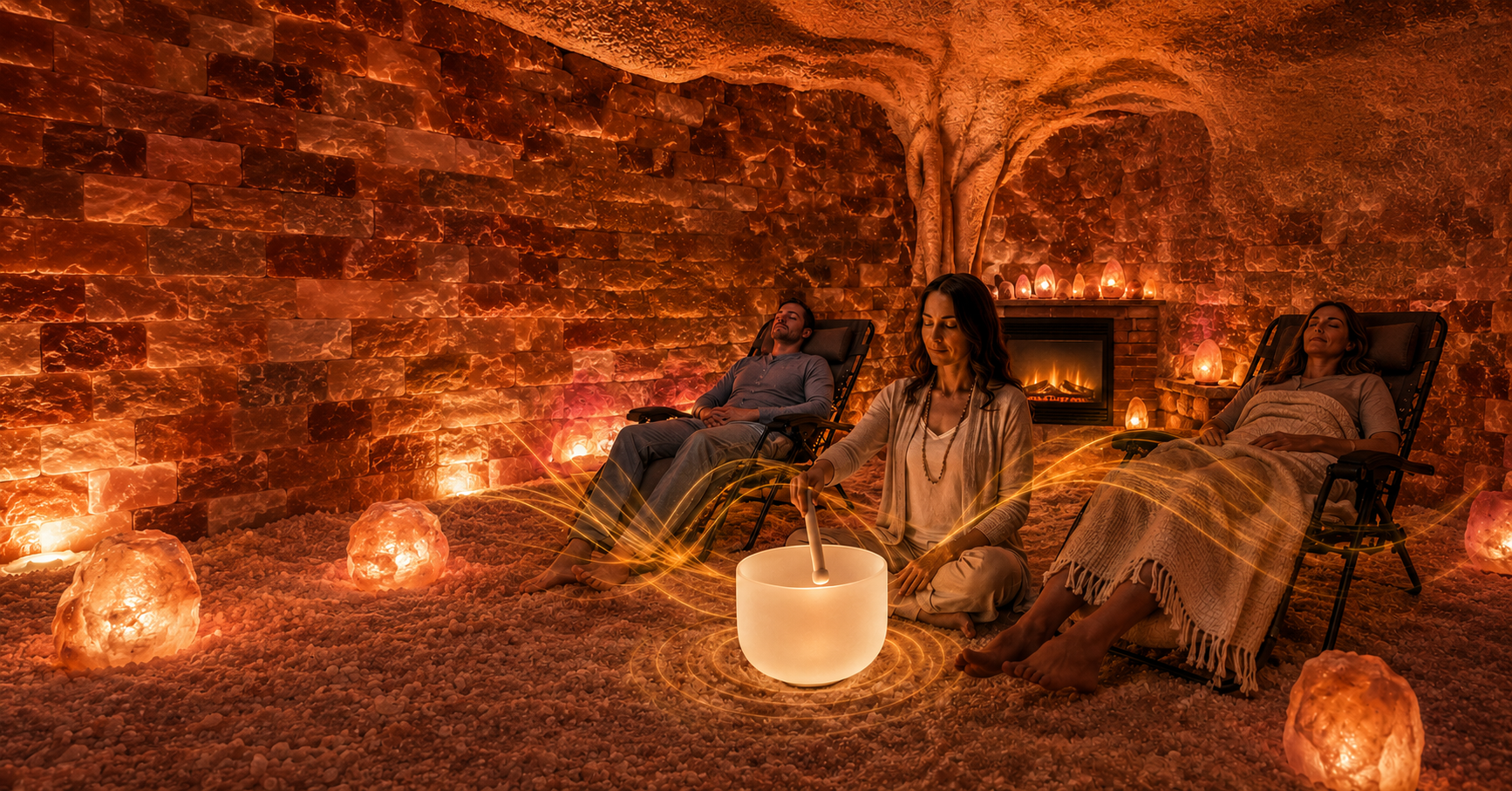
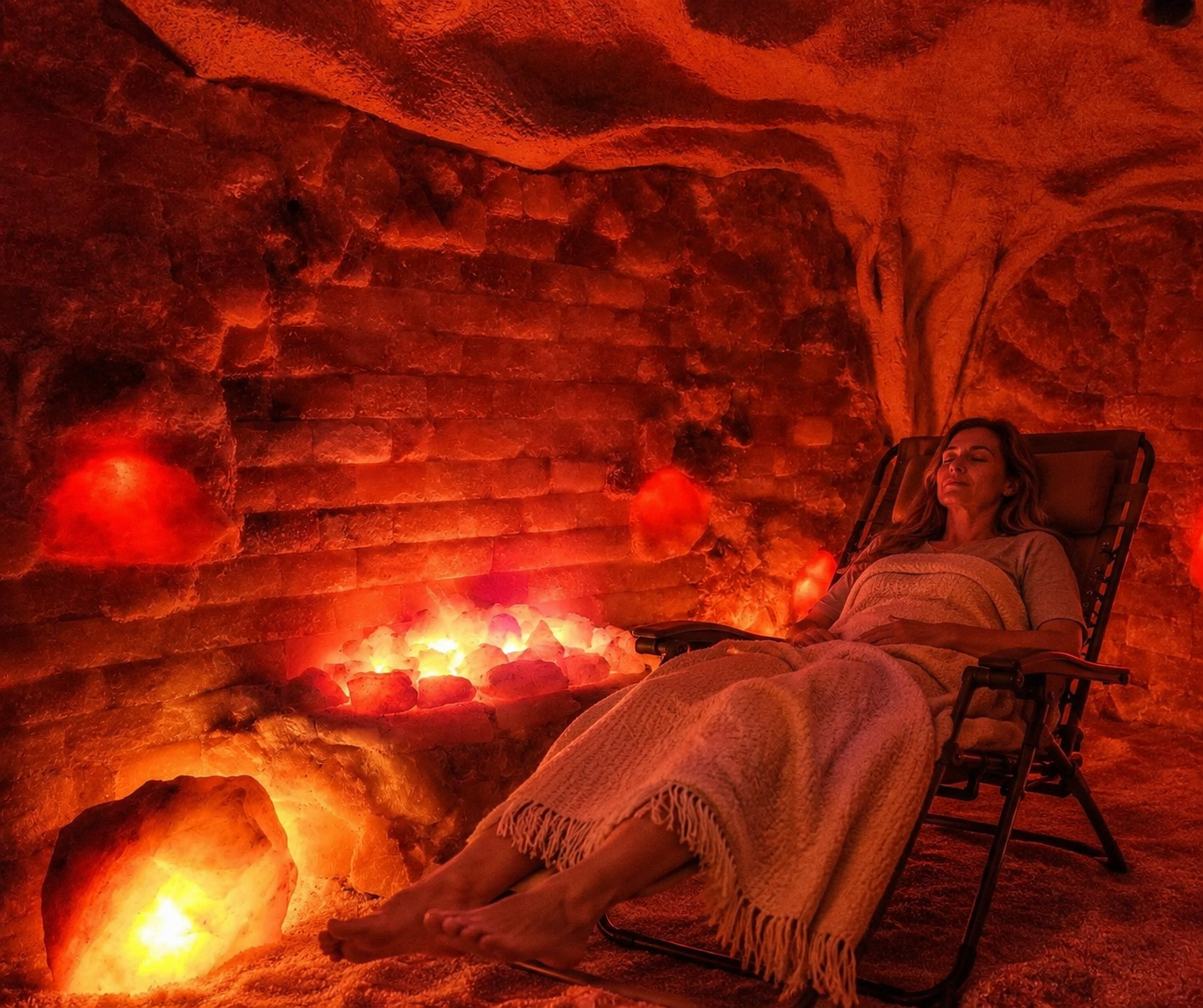
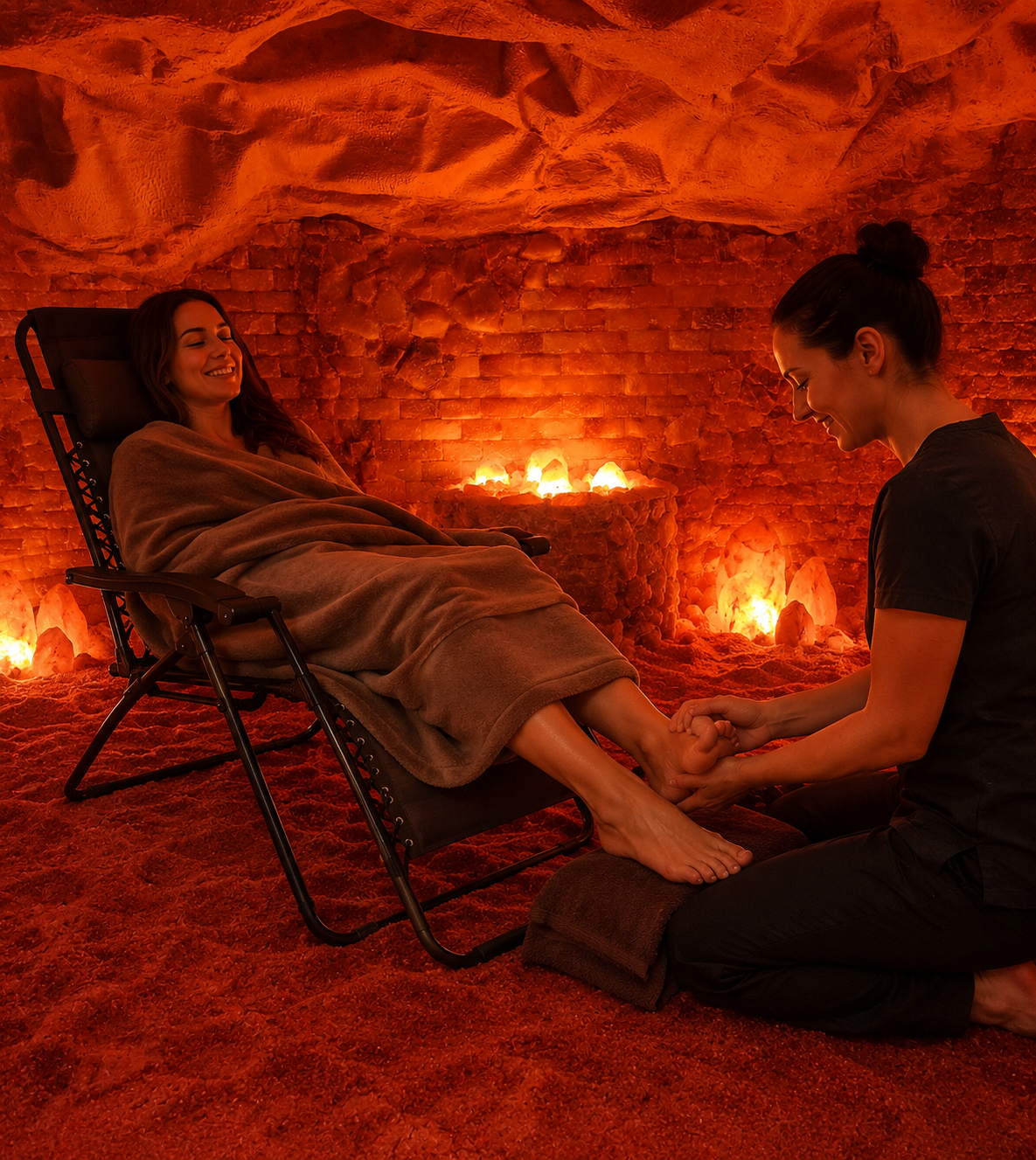
A salt cave creates a peaceful environment for exploring sound healing and vibration.
The softly illuminated Himalayan salt walls, quiet atmosphere, and comfortable seating help participants step away from the distractions of daily life.
Inside the cave, subtle tuning-fork tones are easier to hear. Participants can follow the sound as it moves through the space and gradually fades.
Oceanair Himalayan Salt Cave also provides active dry salt therapy, known as halotherapy, during designated salt cave experiences. A professional halogenerator disperses a controlled concentration of fine, dry salt particles into the room.
The combination of a peaceful salt cave, mindful breathing, sound, and gentle vibration creates a unique Cape Cod wellness experience. It gives participants time to rest while learning a practical technique they may be able to incorporate into their personal wellness routines.
What Will You Learn During the Tuning Forks Workshop?
Oceanair Himalayan Salt Cave’s tuning forks workshop is designed for beginners, curious guests, and wellness professionals.
During this hands-on workshop, participants can learn:
- The healing history of tuning forks
- How tuning forks were used in mid-century healthcare
- The difference between weighted and unweighted forks
- How to activate a tuning fork correctly
- How sound and vibration are experienced by the body
- Ways to use tuning forks for relaxation and meditation
- Basic techniques that may support tension relief
- Important safety guidelines
- Simple methods to practice with a partner
- How wellness professionals can incorporate tuning forks into their work
Participants will have an opportunity to see, hear, and feel the forks rather than simply listening to a lecture about them.
Who Should Attend?
The workshop is open to anyone interested in sound healing, vibration, natural wellness, relaxation, or complementary pain-management techniques.
It may be especially valuable for:
- Massage therapists
- Reiki practitioners
- Yoga teachers
- Meditation instructors
- Sound-healing practitioners
- Holistic wellness professionals
- People experiencing everyday stress and tension
- Anyone curious about noninvasive wellness tools
No musical background or previous tuning-fork experience is required. This is an opportunity to learn about vibration, try simple techniques, and discover how tuning forks may fit into a personal wellness routine.
Discover Tuning Fork Healing on Cape Cod
Tuning forks have traveled from early scientific exploration to medical examinations, mid-century hospitals, and modern sound-healing practices. Today, people are rediscovering them as simple, noninvasive tools for relaxation, body awareness, and complementary pain support.
Oceanair Himalayan Salt Cave offers hands-on tuning forks workshops inside a professionally designed Himalayan salt cave in Orleans, Massachusetts. Workshop space is limited, and advance registration is recommended.
To learn about the next tuning forks workshop or reserve your place, call Oceanair Himalayan Salt Cave at 774-801-2641.